
187 30-MAR 306 18sep 725 3dic 823 2ene 1507 2abr 1897 21may 1996 6jun
| JILGUERITO DE PUERTO RICO ANTILLEAN EUPHONIA Photos by Hilda Morales |
| 1. 2. 3. 4. 5. 6. 7. 8. 9. 10. 11. 12. 13. 14. 15. 16. 17. |
Pictures and videos of our avifauna.
| PUERTO RICAN ENDEMIC AVIFAUNA |
LLOROSA DE PUERTO RICO
Puerto Rican Tanager
PÁJARO BOBO MAYOR DE PUERTO RICO
Puerto Rican Lizard Cuckoo
MUCARITO DE PUERTO RICO
Puerto Rican Screech Owl
COTORRA (IGUACA) DE PUERTO RICO
Puerto Rican Parrot
COMEÑAME DE PUERTO RICO
Puerto Rican Bullfinch
MARIQUITA DE PUERTO RICO
Yellow-Shouldered Black Bird
CARPINTERO DE PUERTO RICO
Puerto Rican Woodpecker
REINITA MARIPOSERA
Adelaide´s Warbler
REINITA DE BOSQUE ENANO
Elfin Woods Warbler
REINA MORA DE PUERTO RICO
Puerto Rican Spindalis
SAN PEDRITO DE PUERTO RICO
Puerto Rican Tody
ZUMBADOR VERDE
Green Mango
ZUMBADORCITO DE PUERTO RICO
Puerto Rican Emerald
JUÍ DE PUERTO RICO
Puerto Rican Flycatcher
BIENTEVEO DE PUERTO RICO
Puerto Rican Vireo
GUABAIRO DE PUERTO RICO
Puerto Rican Nightjar
CALANDRIA DE PUERTO RICO
Puerto RIcan Oriole
Puerto Rican Tanager
PÁJARO BOBO MAYOR DE PUERTO RICO
Puerto Rican Lizard Cuckoo
MUCARITO DE PUERTO RICO
Puerto Rican Screech Owl
COTORRA (IGUACA) DE PUERTO RICO
Puerto Rican Parrot
COMEÑAME DE PUERTO RICO
Puerto Rican Bullfinch
MARIQUITA DE PUERTO RICO
Yellow-Shouldered Black Bird
CARPINTERO DE PUERTO RICO
Puerto Rican Woodpecker
REINITA MARIPOSERA
Adelaide´s Warbler
REINITA DE BOSQUE ENANO
Elfin Woods Warbler
REINA MORA DE PUERTO RICO
Puerto Rican Spindalis
SAN PEDRITO DE PUERTO RICO
Puerto Rican Tody
ZUMBADOR VERDE
Green Mango
ZUMBADORCITO DE PUERTO RICO
Puerto Rican Emerald
JUÍ DE PUERTO RICO
Puerto Rican Flycatcher
BIENTEVEO DE PUERTO RICO
Puerto Rican Vireo
GUABAIRO DE PUERTO RICO
Puerto Rican Nightjar
CALANDRIA DE PUERTO RICO
Puerto RIcan Oriole


BOBITO DE PUERTO RICO
Puerto Rican Pewee
Puerto Rican Pewee
| 18. |
Possible endemic species awaiting for the American
Ornithologist´s Union approval.
Ornithologist´s Union approval.
CLÉRIGO DE PUERTO RICO
Puerto Rican Loggerhead Kingbird
Puerto Rican Loggerhead Kingbird
Article published at the Wilson Journal of Ornithology
on 2009 for a possible new endemic species. Now
awaiting for additional research.
on 2009 for a possible new endemic species. Now
awaiting for additional research.
| 19. |
187 30-MAR 219 3ene 240 13ene 457 19mar

| "As the path of the birds in the air or of fishes in the water is invisible, even so is the path of the possessors of wisdom." |
| PRIVATE ISLANDWIDE BIRDING TRIPS SINCE 1992 |
 |
 |
 |
 |
 |
 |
 |
 |
 |
 |
 |
| ¡Hablamos español! |


| Updated June 16, 2011. |
| 1992 - 2011 Copyrights, BIRDING PUERTO RICO. |
| All photographic and video material on this website is copyrighted by BIRDING PUERTO RICO and/or its contributing photographers. Photos should not be reproduced or exploited in any way without written permission from BIRDING PUERTO RICO. |
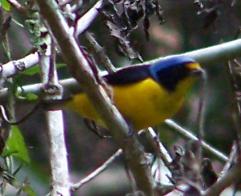
The male in the Lesser Antillean race is more or less identical to
the female (this observer have seen both sexes in the Lesser field
guide, but do not have the photos to show that). Male of the
Puerto Rico form is mostly dark above, with sky-blue crown and
rear neck, and rich yellow on the rump, above the bill, and on the
underside.
Male of the Hispaniolan form is similar to the Puerto Rican form,
but the yellow is replaced with a more orange color, and the throat
is dark. The combination of color and shape is rather unique
within the range.
This species is divided into three subspecies: nominate form is
found in Hispaniola and Gonâve Island, sclateri in Puerto Rico,
while flavifrons is known from Barbuda, Antigua, Guadeloupe, La
Desirade, Dominica, Martinique, St. Lucia, St. Vincent, and known
as a vagrant from other islands in the Lesser Antilles; it is
believed to be extirpated from Saba.believed to be extirpated from
Saba.
the female (this observer have seen both sexes in the Lesser field
guide, but do not have the photos to show that). Male of the
Puerto Rico form is mostly dark above, with sky-blue crown and
rear neck, and rich yellow on the rump, above the bill, and on the
underside.
Male of the Hispaniolan form is similar to the Puerto Rican form,
but the yellow is replaced with a more orange color, and the throat
is dark. The combination of color and shape is rather unique
within the range.
This species is divided into three subspecies: nominate form is
found in Hispaniola and Gonâve Island, sclateri in Puerto Rico,
while flavifrons is known from Barbuda, Antigua, Guadeloupe, La
Desirade, Dominica, Martinique, St. Lucia, St. Vincent, and known
as a vagrant from other islands in the Lesser Antilles; it is
believed to be extirpated from Saba.believed to be extirpated from
Saba.